
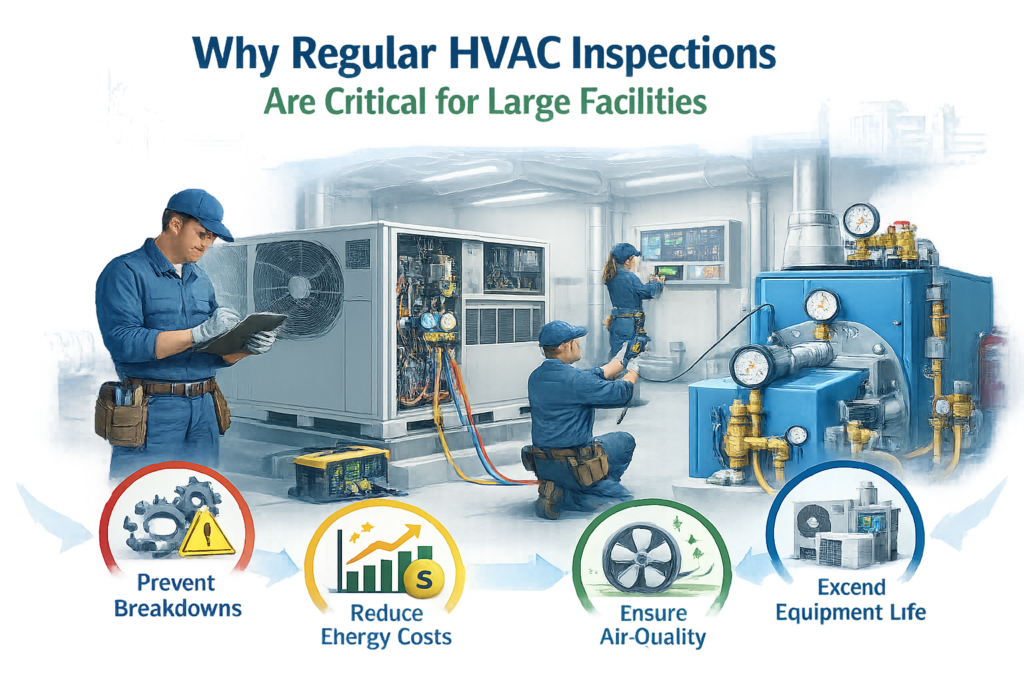
Large commercial and industrial facilities rely on complex HVAC systems to maintain safe, comfortable, and efficient indoor environments. From office buildings and hospitals to manufacturing plants and retail centers, heating and cooling systems operate continuously under heavy demand. Regular HVAC inspections are not just a best practice—they are a critical component of responsible facility management.
Failing to inspect and maintain HVAC systems can lead to unexpected breakdowns, rising energy costs, safety concerns, and costly operational disruptions. Proactive inspections help large facilities stay ahead of problems, protect long-term investments, and ensure consistent performance year-round.
The Complexity of HVAC Systems in Large Facilities
Unlike residential systems, commercial HVAC systems are made up of multiple interconnected components. Large facilities often rely on rooftop units, boilers, chillers, air handlers, VAV systems, ductwork networks, controls, and building automation systems working together.
Because of this complexity, small issues can quickly escalate if left undetected. A minor airflow imbalance, sensor failure, or worn mechanical part can reduce efficiency across an entire building. Regular inspections allow trained professionals to evaluate system performance holistically and identify early warning signs before they affect occupants or operations.
Preventing Costly Breakdowns and Emergency Repairs
One of the primary reasons regular HVAC inspections are essential is breakdown prevention. Emergency HVAC failures in large facilities are disruptive and expensive, often requiring after-hours service, expedited parts, or temporary shutdowns.
Inspections help identify issues such as:
- Failing motors or belts
- Refrigerant leaks
- Electrical wear or loose connections
- Cracked heat exchangers
- Control system malfunctions
Addressing these problems early reduces the likelihood of unexpected failures and helps facilities avoid emergency repair costs that far exceed routine inspection expenses.
Improving Energy Efficiency and Controlling Operating Costs
Energy usage represents one of the largest operating expenses for large facilities, and HVAC systems account for a significant portion of that consumption. When systems are not operating at peak efficiency, energy costs increase rapidly.
Regular HVAC inspections help ensure:
- Proper airflow and balanced systems
- Clean coils and filters
- Accurate thermostat and sensor readings
- Efficient boiler and chiller operation
Even small inefficiencies can compound across large buildings, leading to thousands of dollars in unnecessary energy spending each year. Routine inspections help maintain optimal efficiency and support long-term cost control.
Extending the Life of HVAC Equipment
Commercial HVAC equipment represents a major capital investment. Boilers, chillers, rooftop units, and air handlers are designed to last for decades—but only when properly maintained.
Regular inspections reduce excessive wear, prevent component failure, and help systems reach or exceed their expected lifespan. Facilities that neglect inspections often face premature equipment replacement, which can significantly impact budgets and capital planning.
By catching issues early, inspections protect equipment and delay costly replacements.
Supporting Occupant Comfort and Productivity
In large facilities, indoor comfort directly affects productivity, safety, and satisfaction. Uneven temperatures, poor air circulation, or humidity problems can disrupt operations and create complaints from employees, tenants, or customers.
HVAC inspections help ensure consistent performance across all zones of a facility. By identifying airflow imbalances, control issues, or failing components, inspections support stable indoor conditions that promote comfort and productivity throughout the building.
Maintaining Indoor Air Quality and Health Standards
Indoor air quality is especially important in facilities such as hospitals, schools, offices, and manufacturing environments. Poor air quality can lead to health concerns, increased absenteeism, and compliance issues.
Regular HVAC inspections evaluate:
- Filter condition and effectiveness
- Ventilation performance
- Moisture and mold risks
- Exhaust and makeup air systems
By maintaining proper airflow and filtration, inspections help protect occupant health and ensure compliance with industry and regulatory standards.
Ensuring Safety and Regulatory Compliance
Many large facilities are subject to safety codes, industry regulations, and insurance requirements related to HVAC systems. Boilers, gas-fired equipment, and mechanical systems must operate safely and within compliance guidelines.
Inspections help identify safety hazards such as:
- Gas leaks or combustion issues
- Electrical risks
- Failing safety controls
- Improper ventilation
Staying ahead of compliance requirements reduces liability, protects occupants, and helps facilities avoid fines or insurance complications.
Reducing Downtime and Protecting Business Continuity
For manufacturing plants, data centers, healthcare facilities, and large commercial properties, HVAC downtime can halt operations entirely. Temperature-sensitive equipment, inventory, or processes depend on consistent environmental control.
Routine inspections reduce the risk of unexpected downtime by ensuring systems are ready to handle seasonal demand, extreme weather, and continuous operation. This proactive approach protects business continuity and operational reliability.
Building a Long-Term Maintenance Strategy
Regular HVAC inspections form the foundation of an effective preventive maintenance program. Instead of reacting to failures, facilities gain insight into system condition, performance trends, and upcoming maintenance needs.
This data-driven approach allows facility managers to:
- Plan repairs and upgrades strategically
- Budget more accurately
- Schedule maintenance around operations
- Make informed equipment replacement decisions
Over time, inspections support smarter planning and stronger long-term outcomes.
JF Jacobs Can Help Your Michigan HVAC Facility
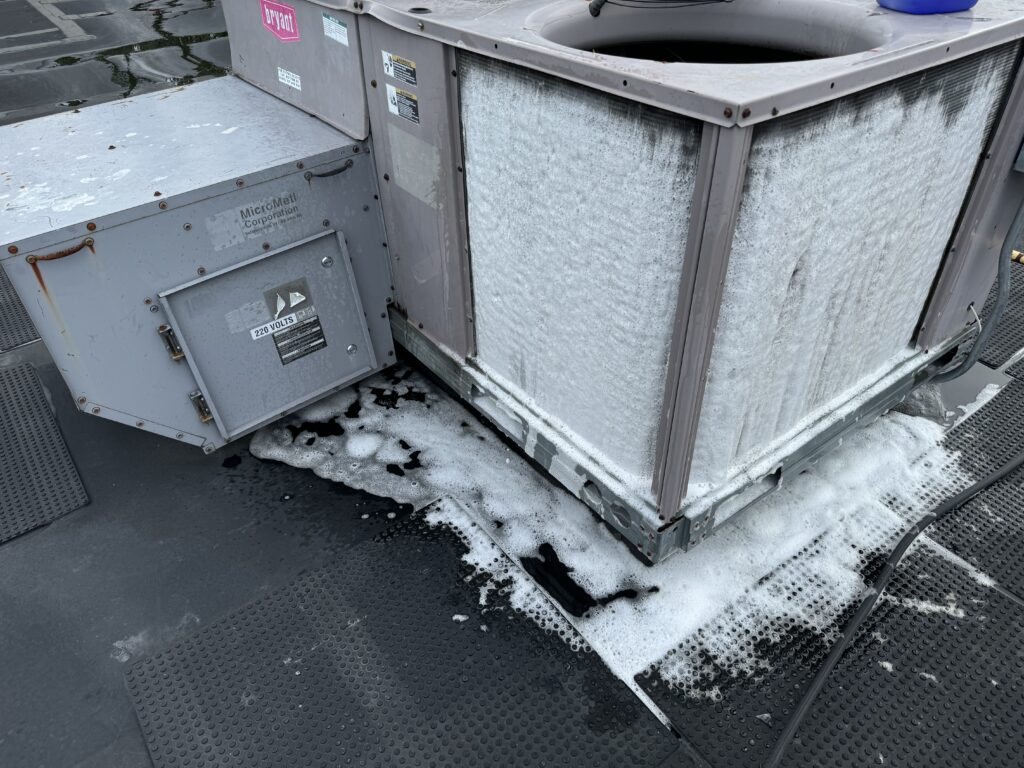
For large facilities, HVAC systems are mission-critical assets that demand proactive care. Regular HVAC inspections help prevent costly breakdowns, control energy costs, extend equipment life, improve indoor comfort, and maintain safety and compliance.
Rather than viewing inspections as an expense, facility managers should see them as an investment in reliability, efficiency, and long-term performance. In complex, high-demand environments, routine inspections are not optional—they are essential to keeping large facilities running smoothly year-round.