
Preparing Your Commercial HVAC System for Michigan’s Winter Season
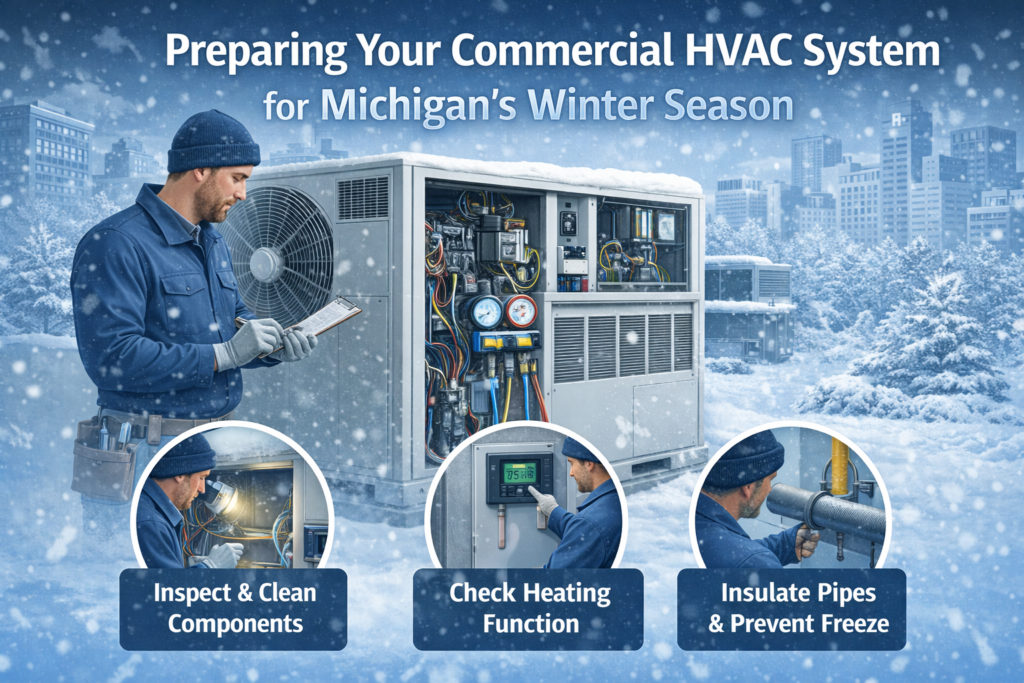
Michigan winters are hard on buildings, equipment, and operating budgets. When temperatures swing from mild fall days to freezing nights, commercial HVAC systems get pushed fast, and small issues can turn into expensive emergencies. The good news is that most winter breakdowns are preventable with smart planning, the right inspections, and a few operational adjustments before the first deep cold snap.
This guide walks through what to check, what to upgrade, and how to build a winter-ready maintenance plan for commercial facilities across Southeast Michigan.
Why winter prep matters for commercial HVAC in Michigan
Commercial boilers operate under high pressure and extreme temperatures. When components fail or safety contrCold weather stress shows up in predictable ways:
- Longer run times mean more wear on belts, motors, bearings, and heat exchangers
- Frozen coils, iced-up intakes, and blocked vents reduce airflow and efficiency
- Poor combustion tuning increases fuel usage and can create safety risks
- Low humidity and uneven heating trigger comfort complaints and productivity issues
- Emergency breakdowns cost more due to after-hours labor and business disruption
A winter-ready system protects uptime, reduces energy waste, and keeps tenants, customers, and staff comfortable.
Start with an early-season assessment
Boiler failures rarely happen at convenient times. Emergency breakdowns often occur during peak winter deThe best winter HVAC preparation starts before heating season is fully underway. If your team waits until you’re getting daily service calls or the first major cold front hits, you’re already behind.
A pre-winter assessment should include:
- Review of last winter’s service history and recurring issues
- System-by-system evaluation (RTUs, boilers, make-up air units, DOAS, split systems, controls)
- Verification that preventive maintenance tasks were completed during the cooling season
- Identification of equipment nearing end-of-life or showing failure patterns
If you manage multiple buildings, prioritize sites based on age, usage, tenant density, and any past winter failures.
Inspect and service heating components
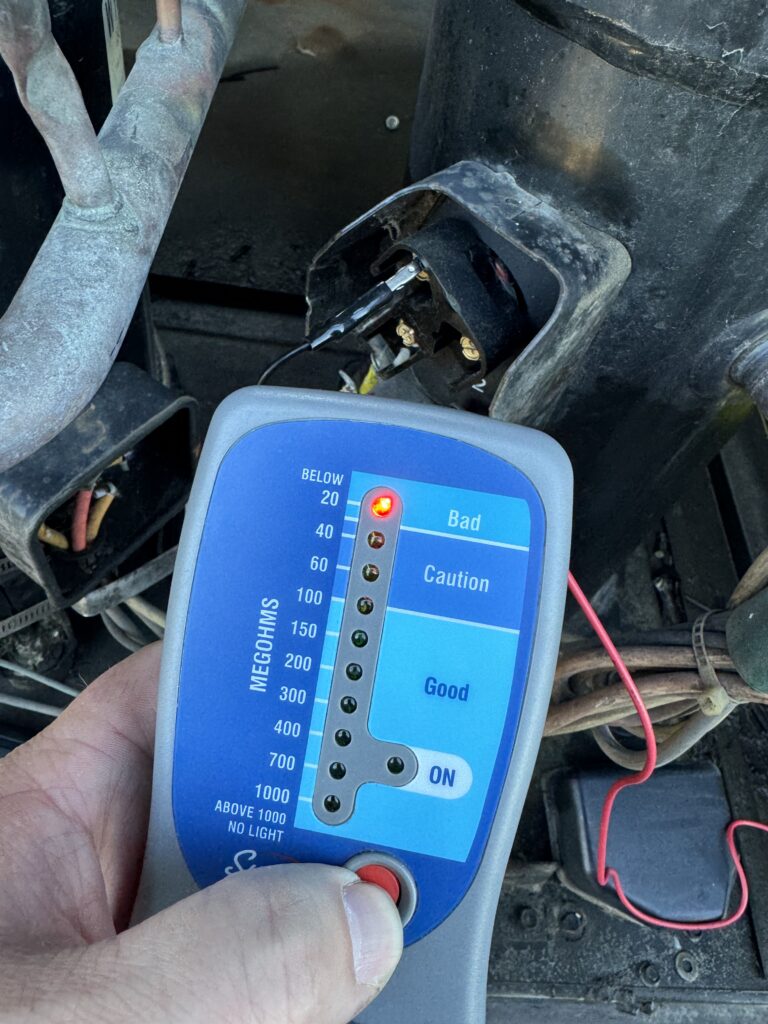
An inefficient boiler consumes more fuel to produce the same level of heat, quietly driving up energy bills Rooftop Units (RTUs) and packaged systems
Many Michigan commercial buildings rely heavily on rooftop equipment. Winter prep for RTUs should include:
- Inspect heat exchangers for cracks and corrosion
- Test ignition sequence and flame sensing components
- Verify gas pressure and regulator function
- Confirm proper venting and combustion air supply
- Check belts, pulleys, blower wheel condition, and motor amperage
- Replace clogged filters and confirm correct filter fit and sealing
- Inspect electrical connections and contactors for heat damage or arcing
A cracked heat exchanger isn’t just an efficiency problem. It’s a safety hazard that can lead to carbon monoxide concerns. This inspection should never be skipped.
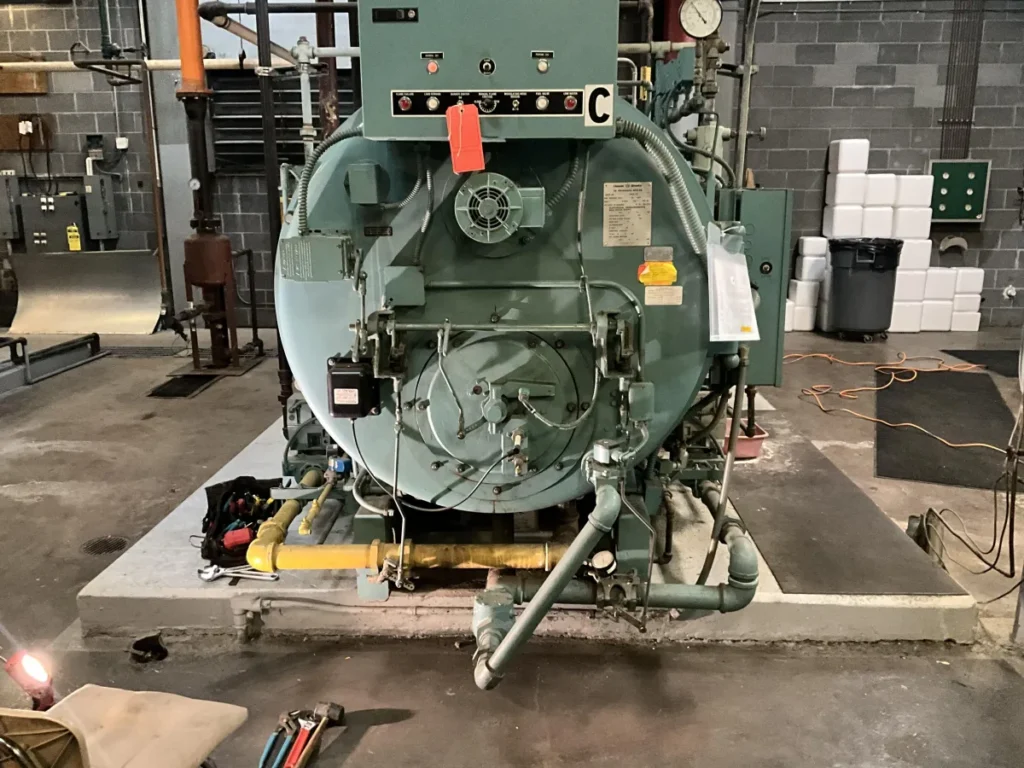
Boilers and hydronic systems
If your facility runs boilers or hydronic heat, winterization is critical. Key tasks include:
- Confirm proper water chemistry and corrosion control
- Inspect pumps, seals, strainers, and isolation valves
- Test pressure relief valves, low-water cutoff, and safety controls
- Verify expansion tank integrity and system pressure
- Inspect combustion components and tune burners
- Check flues, venting, and draft
- Confirm circulation to all zones and troubleshoot cold spots early
Boiler problems often appear as “comfort complaints” first. Uneven heat, slow recovery, or noisy piping can signal air, flow issues, or failing components.
Heat pumps and dual-fuel systems
If you run commercial heat pumps, you’ll want to confirm:
Refrigerant charge stability (low charge can become more obvious in cold weather)
Defrost cycle operation
Outdoor coil cleanliness
Backup heat staging and sequencing
Control logic for balance point and temperature lockouts
Protect outdoor equipment from snow, ice, and wind
Michigan winter conditions can physically block airflow and create freeze-related failures. The biggest preventable issues usually involve airflow restrictions and moisture intrusion.
Clear and protect intake and exhaust paths
Before winter:
- Verify outdoor air intakes are not near drifting snow zones
- Confirm hoods and screens are intact and not clogged
- Ensure exhaust outlets are not restricted and are properly routed
- Keep roof drains clear to prevent standing water and ice buildup around RTUs
Evaluate roof access and safety
If your facility uses rooftop equipment, winter means:
- Slippery access ladders and walk paths
- Icy roof sections around drains and parapets
- Higher risk and longer service times
Consider adding roof walk pads, safe access points, and clear service pathways. Faster access reduces emergency response time when conditions are rough.
Verify building automation and thermostat control strategies
Controls often cause as many winter problems as mechanical failures. A system can be mechanically fine but still waste energy or underperform due to scheduling, sensor drift, or bad programming.
Before winter, review:
- Occupancy schedules and setback temperatures
- Warm-up cycles and morning recovery settings
- Heating staging and economizer lockout conditions
- Sensor calibration (space temp, discharge air temp, outdoor air temp)
- Setpoint consistency across zones
- Alarms and notifications for high/low temps, freeze risk, or equipment failure
If you manage multiple facilities, standardizing control strategies can reduce both energy spend and service calls.
Don’t ignore ventilation, makeup air, and exhaust
Annual boiler inspections are a cornerstone of a broader preventive maintenance strategy. Rather than reactinMany winter comfort issues come from ventilation imbalances, especially in facilities with high exhaust loads.
Common winter scenarios
- Kitchens: heavy exhaust pulls in cold air, creating negative pressure and cold zones
- Warehouses: dock doors increase infiltration and heating load
- Medical/clinical spaces: strict ventilation requirements increase run time and dryness
- Schools: wide occupancy swings create frequent cycling issues
Key tasks include:
- Confirm makeup air units are heating properly and tempered air is delivered as designed
- Ensure exhaust fans are operational and balanced
- Check dampers for proper operation (stuck dampers create big temperature swings)
- Verify ERV/HRV function if installed (these can reduce heating costs significantly when maintained)
Address humidity and indoor air comfort
Winter air in Michigan is dry. When buildings are heated, humidity can drop dramatically, causing:
- Dry skin and eye irritation
- Static electricity (especially in offices and manufacturing)
- Increased respiratory discomfort
- Damage risks for certain products or materials
If your building uses humidification systems, winter prep should include:
- Inspect humidifier canisters, water panels, and feed lines
- Verify controls and setpoints
- Check drain function and water quality issues
- Inspect steam dispersion components if applicable
If you don’t use humidification, focus on controlling infiltration and balancing ventilation. A building that leaks air will always feel drier and cost more to heat.
Replace filters and confirm airflow
IAirflow issues become more expensive in winter because restricted airflow can cause:
- Overheating at heat exchangers
- High limit trips
- Uneven heat distribution and comfort complaints
- Short cycling and unnecessary wear
Before winter:
- Replace filters across RTUs, air handlers, and makeup air units
- Confirm correct MERV rating for your system capability
- Check filter racks for gaps, bypass, or damaged seals
- Inspect coils for dirt buildup (dirty coils create pressure drop and reduce efficiency)
If your team “upgraded” filters for air quality without confirming static pressure and fan capability, winter is when those problems often show up.
Prepare for emergencies with a clear response plan
Even with strong maintenance, winter is unpredictable. Being prepared reduces downtime.
A smart winter response plan includes:
- Up-to-date equipment list with model/serial numbers and locations
- After-hours service contact protocol and escalation steps
- Spare parts strategy for common failure items (filters, belts, igniters, flame sensors, fuses)
- Critical space prioritization (server rooms, healthcare areas, food storage, production zones)
- Clear access instructions for mechanical rooms and roof hatches
For multi-tenant properties, make sure tenants know how to report heating issues, and confirm your team can quickly identify whether it’s a zone-level issue or system-wide failure.
Consider winter upgrades that pay off
Not every facility needs new equipment, but targeted upgrades can improve reliability and cut operating costs.
High-value winter-focused improvements often include:
- Smart thermostats or improved zoning controls for large spaces
- Updated sensors and BAS tuning
- Economizer repair or replacement where applicable
- Demand-controlled ventilation (when appropriate)
- Variable frequency drives (VFDs) on fans and pumps
- Better insulation on piping in mechanical rooms and roof runs
- Air sealing and door strategies for high-infiltration areas (loading docks)
If you’re seeing repeated winter issues, it’s often more cost-effective to fix the root cause than to keep paying for emergency calls.
The ideal winter prep timeline for Michigan facilities
A simple seasonal timeline that works:
Late September – Early October
- Full system inspections and preventive maintenance
- Controls review and schedule verification
- Filter replacements and airflow checks
Mid October – Early November
- Burner tuning and safety checks
- Boiler testing and hydronic balancing
- Makeup air and ventilation verification
First sustained cold period
- Monitor performance and complaints
- Adjust controls and scheduling based on occupancy patterns
- Confirm response plan and stock critical parts
When to call a commercial HVAC contractor before winter hits
You should schedule service now if you’ve experienced any of the following:
- Heating takes longer than normal to recover in the morning
- Uneven temperatures across zones
- Repeated limit trips, system resets, or nuisance alarms
- Noisy operation, strong odors, or unusual vibrations
- Rising utility costs without changes in occupancy or hours
- Past winter failures that were “patched” but not fully resolved
Michigan winter exposes weak points quickly. The earlier you diagnose, the more options you have, and the lower the cost usually is.
Final checklist for winter readiness
Use this as a quick reference:
- Heating components inspected, cleaned, and tested
- Boiler and hydronic systems tuned, safe, and balanced
- Filters replaced and airflow verified
- Outdoor intakes and exhaust paths protected and clear
- Controls schedules and sensors reviewed and calibrated
- Makeup air, ventilation, and exhaust systems balanced
- Emergency response plan updated with contacts and equipment details
- Critical spares stocked and roof access/safety addressed