
Upgrading Your Commercial Boiler System: What You Need to Know
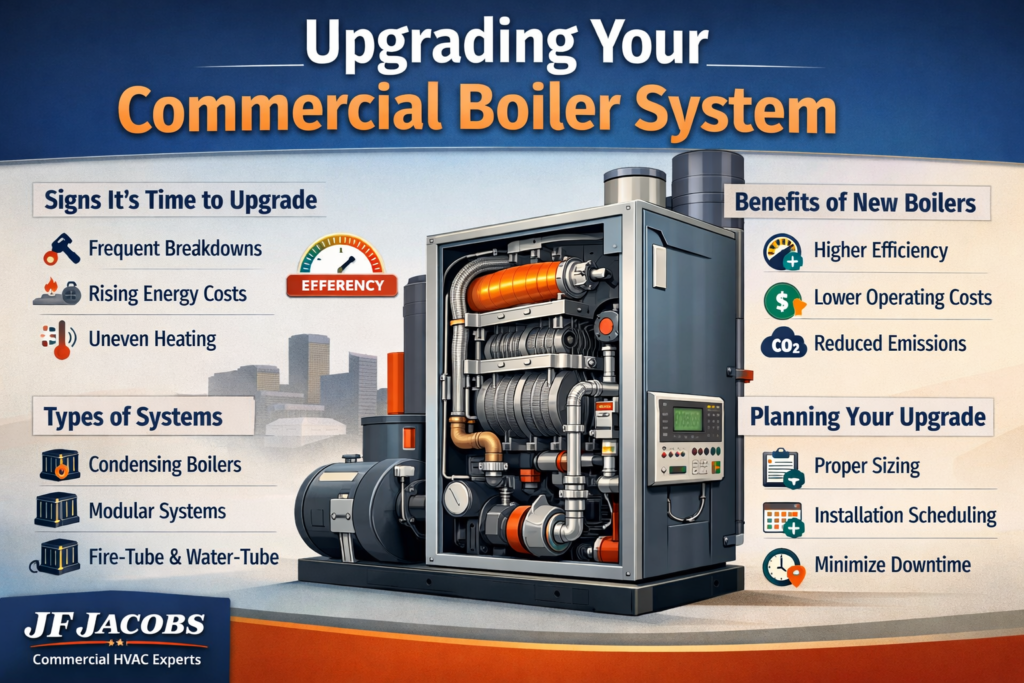
Commercial boiler systems are the backbone of heating for many buildings across Southeast Michigan. From office complexes and medical facilities to manufacturing plants and multi-tenant properties, boilers play a critical role in maintaining comfort, safety, and operational continuity during Michigan’s long, demanding winters.
If your boiler system is aging, inefficient, or increasingly unreliable, upgrading is not just a mechanical decision — it’s a strategic investment that impacts operating costs, energy efficiency, compliance, and long-term building value.
This guide walks through everything you need to know before upgrading a commercial boiler system, including when replacement makes sense, what options are available, how to plan the project, and how to avoid costly mistakes.
Signs your commercial boiler system needs an upgrade
A boiler doesn’t need to completely fail before replacement becomes the smarter option. In fact, waiting until failure often results in rushed decisions, higher costs, and operational disruptions.
Common indicators that an upgrade should be evaluated include:
- Frequent service calls or emergency repairs
- Rising fuel consumption without increased demand
- Uneven heating across zones or floors
- Excessive noise, vibration, or cycling
- Outdated controls with limited automation
- Difficulty maintaining code compliance
If your boiler requires frequent attention just to keep running, replacement planning should begin before winter forces your hand.
Repair vs. replacement: making the right call
One of the biggest questions facility managers face is whether to continue repairing an aging boiler or invest in a new system.
When repairs still make sense
Repairs may be reasonable if:
- The boiler is under 15 years old
- Efficiency remains within acceptable ranges
- Parts are readily available
- The system supports current building needs
When replacement is the smarter investment
Upgrading typically makes more sense when:
- Annual repair costs are escalating
- Efficiency losses exceed 20–30%
- Downtime risks disrupt operations
- The system no longer meets load requirements
- You’re planning other building upgrades
A properly sized, modern boiler can pay for itself over time through reduced fuel usage, fewer repairs, and improved system reliability.
Types of commercial boiler systems to consider
Modern commercial boilers are far more efficient, adaptable, and controllable than older models. Choosing the right type depends on your building’s size, usage, and heating demands.
Condensing boilers
Condensing boilers capture heat from exhaust gases that older boilers waste. They offer:
- Significantly higher efficiency
- Lower fuel consumption
- Reduced emissions
These systems are especially effective in buildings with variable heating loads.
Modular boiler systems
Instead of one large boiler, modular systems use multiple smaller units working together. Benefits include:
- Redundancy (no single point of failure)
- Improved part-load efficiency
- Easier maintenance and scalability
Modular systems are increasingly popular for commercial facilities with fluctuating demand.
High-efficiency fire-tube and water-tube boilers
Modern fire-tube and water-tube designs provide improved heat transfer, faster response times, and higher reliability compared to older models.
Right-sizing the boiler: why capacity matters
One of the most common — and costly — mistakes in boiler upgrades is improper sizing.
Oversized boilers
Oversized systems:
- Short-cycle frequently
- Waste fuel
- Experience increased wear
- Fail prematurely
Undersized boilers
Undersized systems:
- Struggle during peak cold weather
- Create comfort issues
- Operate continuously under stress
A professional load calculation based on building size, insulation, occupancy, and usage patterns is essential to selecting the correct capacity.
Controls, automation, and modern efficiency gains
Controls often cause as many winter problems as mechanical failures. A system can be mechanically fine but A boiler upgrade isn’t just about the equipment itself — it’s about how the system operates.
Advanced boiler controls
Modern control systems allow:
- Precise temperature regulation
- Outdoor air reset functionality
- Load-based modulation
- Remote monitoring and diagnostics
These features dramatically improve efficiency while reducing operator intervention.
Building management system integration
Upgraded boilers can integrate with existing BMS platforms, providing centralized control, reporting, and performance optimization across the entire facility.
Energy efficiency, incentives, and long-term savings
High-efficiency commercial boilers reduce fuel consumption significantly, especially during Michigan’s extended heating season.
Lower operating costs
Modern boilers often deliver:
- 15–40% fuel savings
- Reduced maintenance expenses
- Fewer emergency repairs
Utility rebates and incentives
Depending on the system and efficiency level, rebates or incentives may be available through:
- Utility providers
- Energy efficiency programs
- Local or state initiatives
Factoring incentives into upgrade planning can substantially improve ROI.
Compliance, safety, and future-proofing
Commercial boiler upgrades also help ensure compliance with:
- Local and state mechanical codes
- Emissions standards
- Insurance and safety requirements
New systems incorporate advanced safety controls, pressure monitoring, and fail-safe mechanisms that older boilers simply lack.
Future-proofing your building with modern equipment reduces regulatory risk and protects long-term asset value.
Planning a boiler upgrade without disrupting operations
For commercial facilities, downtime is often the biggest concern.
A well-planned boiler upgrade should include:
- Off-season installation scheduling
- Temporary heating solutions if needed
- Phased installation for large facilities
- Clear communication with building stakeholders
Working with an experienced commercial contractor ensures the upgrade is completed efficiently with minimal operational impact..
Why local expertise matters in Michigan
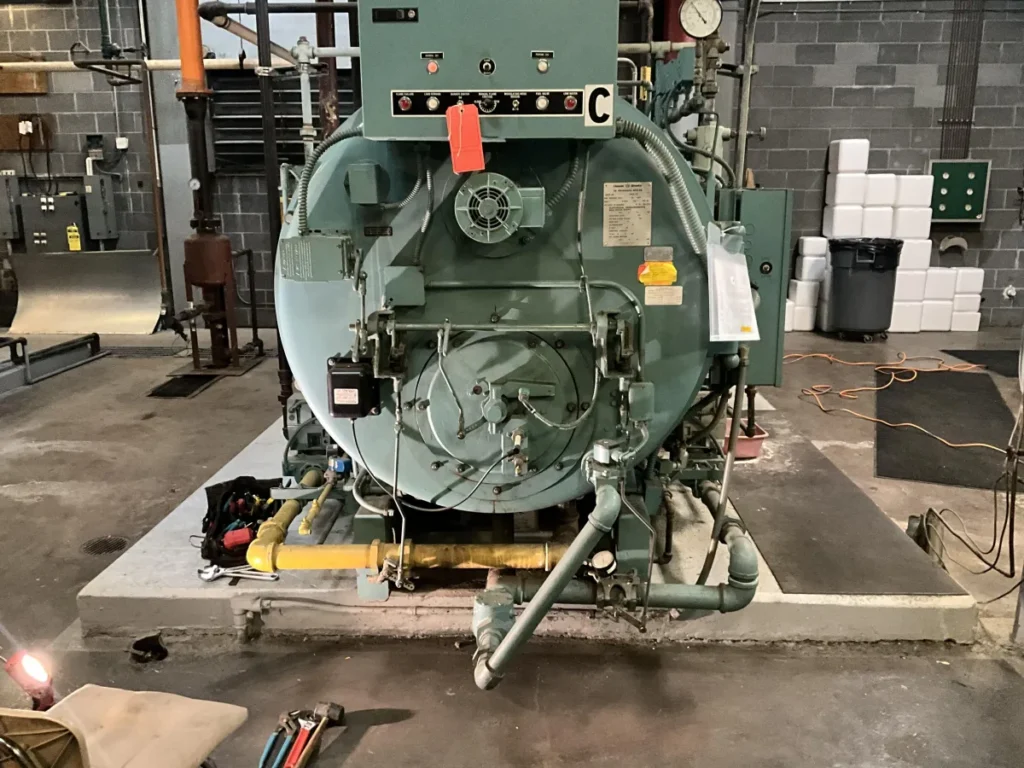
Michigan’s climate presents unique challenges for boiler systems, including:
- Extended heating seasons
- Freeze–thaw cycles
- High peak-demand loads
JF Jacobs understands the demands placed on commercial boiler systems in Southeast Michigan and designs upgrade solutions that prioritize reliability, efficiency, and long-term performance.
Upgrading is a strategic investment
NotUpgrading your commercial boiler system is not just a maintenance decision — it’s an opportunity to improve efficiency, reduce risk, and modernize your building’s infrastructure.
With proper planning, professional sizing, and modern controls, a boiler upgrade can:
- Lower operating costs
- Improve occupant comfort
- Reduce emergency repairs
- Extend system lifespan
- Strengthen compliance and safety
If your boiler system is approaching the end of its useful life or struggling to meet today’s demands, now is the time to start planning — before winter forces urgent decisions.
The ideal winter prep timeline for Michigan facilities
A simple seasonal timeline that works:
Late September – Early October
- Full system inspections and preventive maintenance
- Controls review and schedule verification
- Filter replacements and airflow checks
Mid October – Early November
- Burner tuning and safety checks
- Boiler testing and hydronic balancing
- Makeup air and ventilation verification
First sustained cold period
- Monitor performance and complaints
- Adjust controls and scheduling based on occupancy patterns
- Confirm response plan and stock critical parts
When to call a commercial HVAC contractor before winter hits
You should schedule service now if you’ve experienced any of the following:
- Heating takes longer than normal to recover in the morning
- Uneven temperatures across zones
- Repeated limit trips, system resets, or nuisance alarms
- Noisy operation, strong odors, or unusual vibrations
- Rising utility costs without changes in occupancy or hours
- Past winter failures that were “patched” but not fully resolved
Michigan winter exposes weak points quickly. The earlier you diagnose, the more options you have, and the lower the cost usually is.