
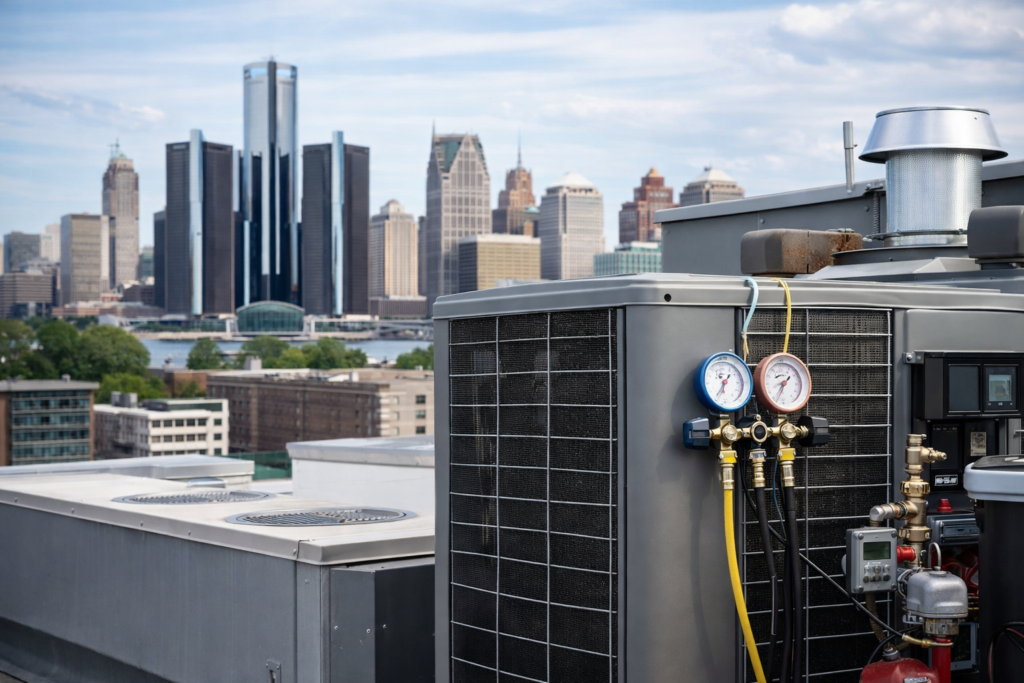
How Often Should You Replace a Commercial HVAC System?
Understanding Commercial HVAC Lifespan, Replacement Timing & Warning Signs
Commercial HVAC systems are one of the most important investments in any building. From office complexes and manufacturing facilities to schools, healthcare properties, restaurants, and retail spaces, reliable heating and cooling equipment plays a major role in daily operations.
Because commercial HVAC replacement can be a significant expense, many facility managers and business owners ask the same question:
How often should a commercial HVAC system be replaced?
The answer depends on several factors, including the type of equipment, maintenance history, operating conditions, system efficiency, and overall performance.
While every building is different, understanding the expected lifespan of commercial HVAC equipment can help you plan ahead, reduce emergency replacements, and make better long-term decisions for your facility.
How Long Does a Commercial HVAC System Last?
Most commercial HVAC systems last approximately 15 to 25 years, depending on the equipment type, usage, environment, and maintenance schedule.
However, age alone does not determine when replacement is necessary.
A well-maintained system may continue operating efficiently beyond its expected lifespan, while neglected equipment may experience major failures much sooner.
Several factors influence commercial HVAC lifespan, including:
- Equipment quality
- Installation quality
- Preventive maintenance history
- Daily operating demands
- Building size
- Climate conditions
- Repair history
- System efficiency
Commercial buildings throughout Michigan experience demanding seasonal changes, which makes routine maintenance especially important for extending equipment life.
Average Lifespan of Commercial HVAC Equipment
Different types of commercial HVAC equipment have different expected service lives.
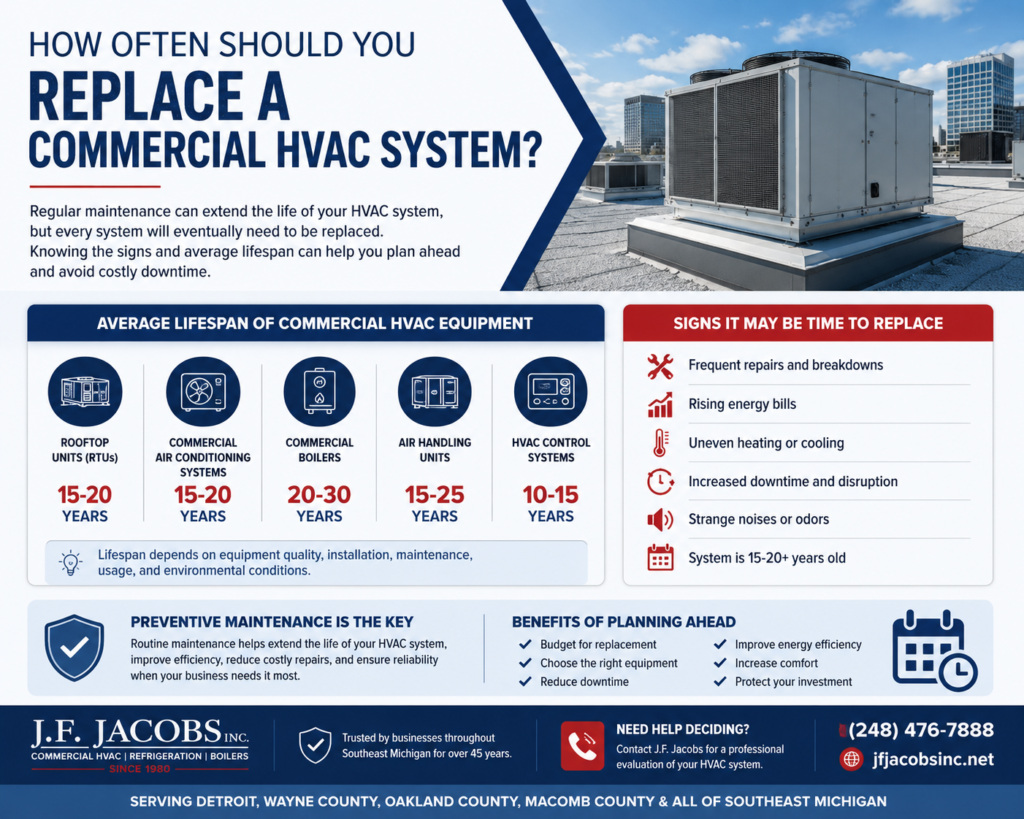
Rooftop Units (RTUs)
15–20 years
RTUs are exposed to outdoor conditions year-round, including Michigan winters, summer heat, rain, and temperature changes.
Routine inspections and maintenance can help extend rooftop unit performance and prevent premature replacement.
Commercial Air Conditioning Systems
Commercial cooling systems typically last:
15–20 years
Systems that operate continuously or serve high-demand facilities may require replacement sooner.
Signs of aging often include:
- Reduced cooling performance
- Higher energy bills
- Frequent repairs
- Refrigerant issues
- Longer operating cycles
Commercial Boilers
Commercial boilers often last:
20–30 years
Boiler lifespan depends heavily on maintenance, water quality, operating conditions, and system usage.
Routine inspections help identify issues before major failures occur.
Air Handling Units
Air handlers typically last:
15–25 years
Because air handling equipment affects airflow and indoor comfort, declining performance can impact the entire HVAC system.
Signs It May Be Time to Replace Your Commercial HVAC System
A commercial HVAC system rarely fails without warning. Most systems show signs of declining performance before a complete breakdown occurs.
Here are common indicators that replacement may be approaching.
Frequent HVAC Repairs
Occasional repairs are expected, but repeated service calls may indicate that equipment is reaching the end of its useful life.
If repair costs continue increasing each year, replacement may provide better long-term value.
Common recurring issues include:
- Compressor problems
- Electrical failures
- Motor replacements
- Refrigerant leaks
- Control system issues
- Poor airflow
At a certain point, investing in new equipment becomes more cost-effective than continually repairing an aging system.
Rising Energy Costs
Older HVAC systems often become less efficient over time.
As components wear down, systems must work harder to maintain comfortable temperatures. This increased workload leads to higher energy consumption and greater operating expenses.
Replacing outdated equipment with modern, energy-efficient systems can help:
- Reduce utility costs
- Improve performance
- Lower maintenance expenses
- Increase reliability
Uneven Heating or Cooling
If certain areas of your building are consistently too hot or too cold, your HVAC system may no longer be operating properly.
Temperature problems may be caused by:
- Aging equipment
- Poor airflow
- Failing components
- Incorrect system capacity
- Control issues
A professional evaluation can determine whether repairs or replacement provide the best solution.
Increased Downtime
For commercial facilities, HVAC downtime affects more than comfort.
System failures can impact:
- Employee productivity
- Customer experience
- Tenant satisfaction
- Manufacturing operations
- Temperature-sensitive equipment
If your system regularly disrupts business operations, replacement may reduce long-term risk.
Operational Reliability
Businesses often prioritize reliability over continually investing in aging equipment.
A professional HVAC evaluation can help determine the most cost-effective path forward.
Signs Your Commercial HVAC System May Be Nearing Replacement
Many HVAC systems provide warning signs before complete failure occurs.
Common indicators include:
- Rising utility costs
- Frequent repairs
- Uneven temperatures
- Poor airflow
- Excessive noise
- Difficulty maintaining comfort
- Aging equipment
- Increased downtime
- Refrigerant issues
Recognizing these warning signs early allows businesses to plan for replacement before an emergency occurs.
How Long Does a Commercial HVAC System Typically Last?
While lifespan varies depending on maintenance and operating conditions, most commercial HVAC systems generally last:
Equipment Type | Typical Lifespan |
|---|---|
Rooftop Units (RTUs) | 15–20 Years |
Commercial Split Systems | 15–20 Years |
Boilers | 20–30 Years |
Chillers | 20–25 Years |
Air Handlers | 15–25 Years |
Should You Repair or Replace Your Commercial HVAC System?
Deciding between HVAC repair and replacement requires evaluating both short-term costs and long-term performance.
Replacement may make sense when:
- Equipment is 15–20+ years old
- Repair costs continue increasing
- Parts become difficult to find
- Efficiency has significantly declined
- System reliability is affecting operations
Repair may make sense when:
- Equipment is newer
- Issues are isolated
- Repairs are affordable
- System efficiency remains strong
A professional inspection can help determine which option provides the best value.
How Preventive Maintenance Extends HVAC Lifespan
The best way to delay commercial HVAC replacement is through consistent preventive maintenance.
Routine service helps identify problems early, improve efficiency, and reduce unnecessary wear.
Preventive maintenance typically includes:
- Equipment inspections
- Filter replacement
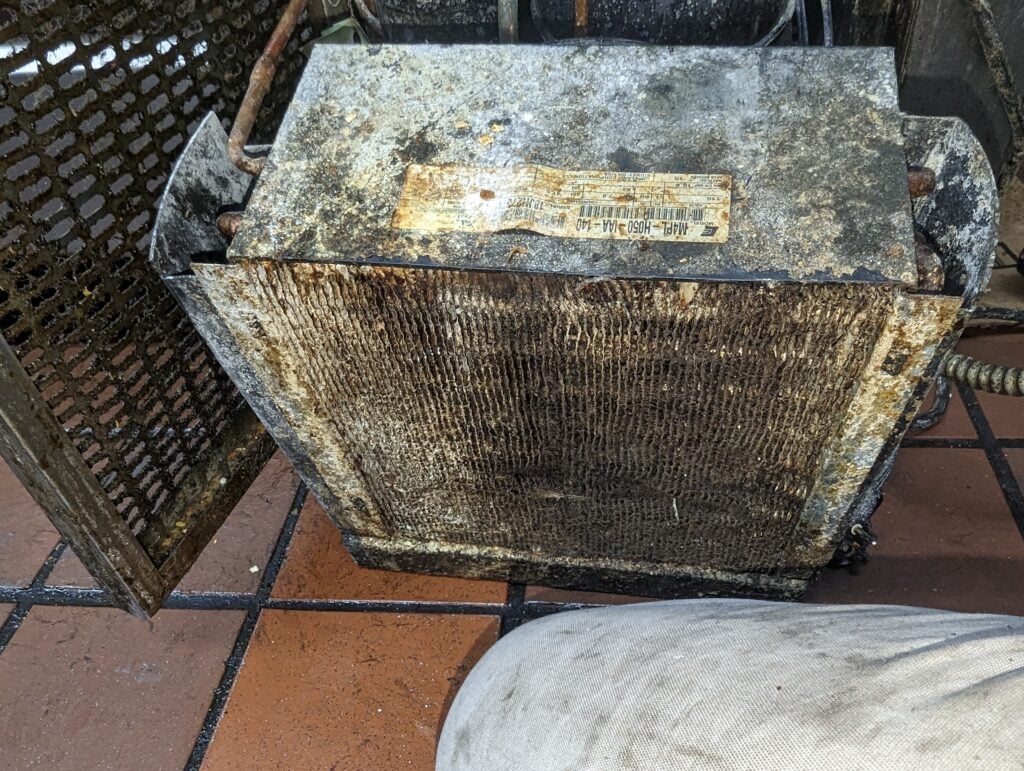
- Coil cleaning
- Electrical testing
- Refrigerant checks
- Belt inspections
- Lubrication
- Performance testing
- Safety inspections
Facilities with regular maintenance programs often experience fewer breakdowns and longer equipment life.
Commercial HVAC Replacement in Michigan
Michigan businesses experience extreme temperature changes throughout the year, from freezing winters to hot summer conditions.
These seasonal demands place significant stress on HVAC equipment.
J.F. Jacobs works with businesses throughout Southeast Michigan to evaluate aging HVAC systems and recommend solutions based on performance, efficiency, and long-term value.
Our team provides:
- Commercial HVAC replacement
- System evaluations
- Rooftop unit replacement
- Equipment upgrades
- Preventive maintenance programs
- Commercial HVAC repairs
Serving Southeast Michigan Businesses Since 1980
For more than 45 years, J.F. Jacobs has provided commercial HVAC services throughout:
- Detroit
- Livonia
- Wayne County
- Oakland County
- Macomb County
- Metro Detroit
- Southeast Michigan
Our goal is to help businesses improve reliability, reduce downtime, and maximize the value of their HVAC investment.
When Should You Replace a Commercial HVAC System?
Most commercial HVAC systems should be evaluated for replacement after 15–25 years, but age is only one factor.
Maintenance history, repair costs, efficiency, reliability, and building needs all play an important role in deciding when replacement makes sense.
By monitoring system performance and investing in preventive maintenance, businesses can avoid unexpected failures and make smarter long-term decisions.
If your commercial HVAC system is aging, requiring frequent repairs, or no longer meeting your building’s needs, scheduling a professional evaluation can help determine the best next step.