
Top Facility Management Tips to Reduce Heating and Cooling Costs
Energy expenses continue to climb across Michigan, and for commercial properties, heating and cooling systems often represent the single largest controllable operating cost. Whether you manage an office complex in Livonia, a manufacturing facility in Oakland County, a school in Wayne County, or a healthcare property in Macomb County, HVAC inefficiencies can quietly erode profitability month after month.
What many building owners don’t realize is that energy waste often happens gradually. A system that once operated efficiently may now be consuming significantly more fuel or electricity simply due to age, lack of calibration, or changing building usage patterns. Rising utility bills are frequently a symptom of deeper system inefficiencies that compound over time.
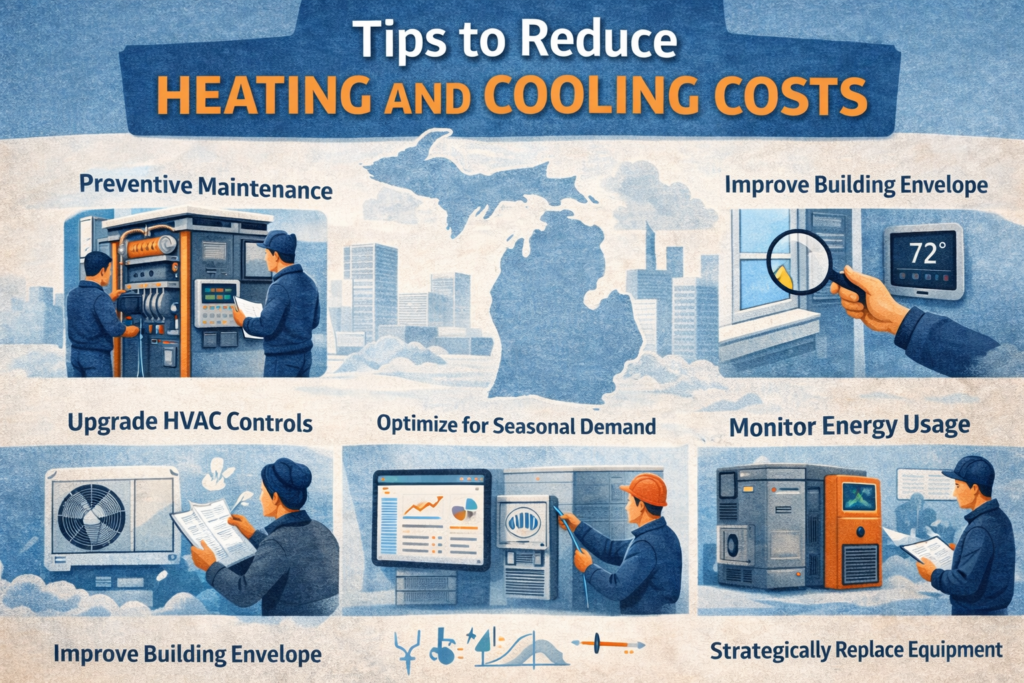
Reducing commercial heating and cooling costs requires a comprehensive approach that blends preventive maintenance, building science, modern controls, operational discipline, and strategic capital planning. The following facility management strategies are designed to help commercial buildings across Southeast Michigan operate more efficiently without sacrificing comfort or reliability.
Understand Where Energy Is Being Lost
Before implementing improvements, facility managers must identify the root causes of energy waste. Without accurate diagnostics, energy-saving initiatives often become guesswork rather than targeted solutions.
Energy loss in commercial buildings typically stems from a combination of mechanical inefficiencies and structural vulnerabilities. HVAC systems may be operating beyond design capacity, running simultaneously in heating and cooling modes, or compensating for uncontrolled air infiltration. In some facilities, outdated thermostats or improperly configured building automation systems cause systems to run during unoccupied hours, driving up costs unnecessarily.
Utility bill analysis can reveal patterns that signal inefficiencies. For example, if fuel usage spikes disproportionately during moderate weather, it may indicate short cycling or improper outdoor air reset settings. If electrical demand remains high overnight, scheduling controls may need adjustment. A professional HVAC evaluation can provide data-driven insight into system performance and identify specific areas for improvement.
Understanding where energy is being lost allows facility managers to prioritize corrective actions that produce measurable financial returns rather than relying on assumptions.
Mechanical inefficiencies
- Dirty heat exchangers or evaporator coils
- Clogged filters restricting airflow
- Failing motors or belts
- Improper refrigerant charge
- Misaligned or poorly tuned burners
Control-related inefficiencies
- HVAC systems running during unoccupied hours
- Simultaneous heating and cooling
- Improper outdoor air settings
- Poorly configured temperature setbacks
Structural inefficiencies
- Air leaks around doors and windows
- Inadequate insulation
- Aging roof systems
- Poorly sealed mechanical penetrations
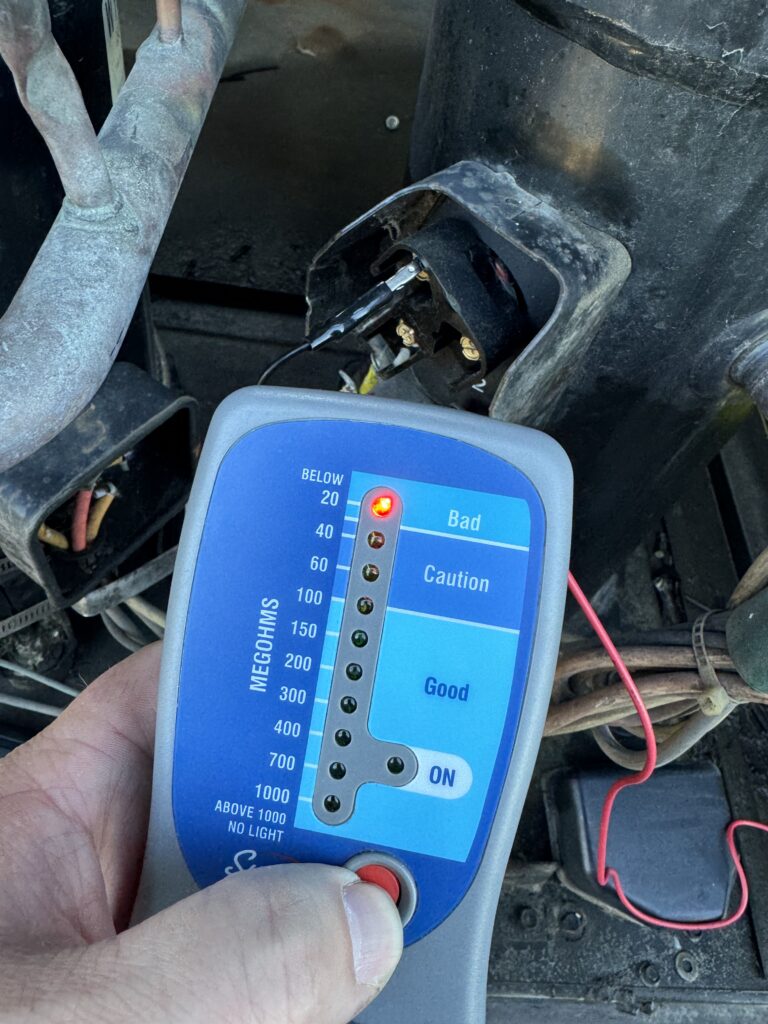
A professional system evaluation combined with utility bill analysis often reveals trends that indicate specific performance problems. For example, if gas usage remains high during moderate weather, the system may be short cycling or operating with inefficient combustion settings.
Accurate diagnostics allow facility managers to prioritize improvements that generate measurable ROI rather than making broad assumptions.
Strengthen Preventive Maintenance Programs
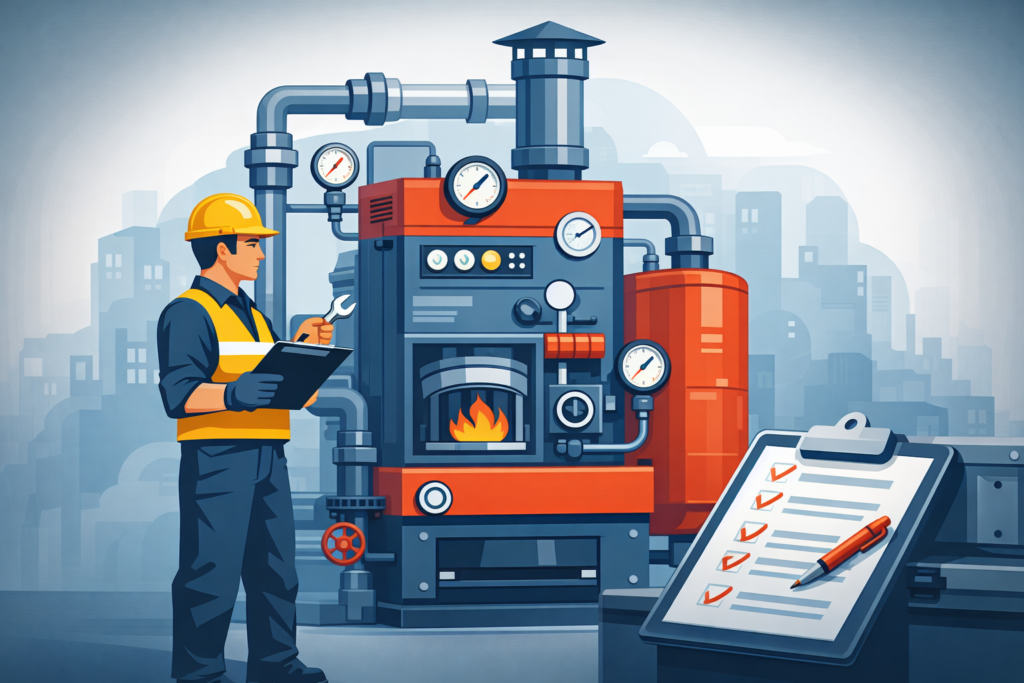
Preventive maintenance is one of the highest-return investments a facility can make. HVAC systems are mechanical assets that degrade gradually without routine service.
When maintenance is inconsistent, systems compensate by working harder. This increases energy consumption and accelerates component wear.
A structured commercial HVAC maintenance program should include:
- Quarterly filter replacement or inspection
- Coil cleaning (heating and cooling)
- Combustion analysis and burner tuning
- Motor and belt inspections
- Electrical connection tightening
- Sensor and thermostat calibration
- Condensate drain inspection
- Safety control testing
Each of these items directly impacts efficiency. For example, even a moderately dirty coil can reduce heat transfer by 10–20%, forcing longer runtime and higher fuel consumption.
In Michigan’s climate, where heating systems operate for extended periods, neglected maintenance leads to compounding energy waste and higher emergency repair costs during peak winter demand.
Implement Smart HVAC Controls and Automation
Modern building automation systems dramatically improve heating and cooling efficiency. Many commercial buildings still rely on outdated thermostats or limited scheduling capabilities.
Smart control upgrades can include:
Advanced scheduling
- Automated weekday/weekend programming
- Holiday overrides
- Occupancy-based adjustments
Outdoor air reset
- Reduces boiler water temperature during milder days
- Prevents overheating and short cycling
Demand-controlled ventilation
- Adjusts outside air intake based on occupancy
- Reduces unnecessary heating or cooling load
Remote monitoring
- Real-time alerts for abnormal system behavior
- Performance tracking dashboards
In Southeast Michigan’s variable climate, responsive control systems prevent over-conditioning during transitional seasons. The result is lower fuel consumption, reduced equipment wear, and improved occupant comfort.
Ensure Equipment Is Properly Sized
Improper equipment sizing creates chronic inefficiencies.
Oversized systems often:
- Short cycle repeatedly
- Waste fuel during startup phases
- Experience increased mechanical stress
- Fail prematurely
Undersized systems:
- Run continuously during peak weather
- Struggle to maintain consistent temperature
- Increase energy usage due to extended runtime
A professional load calculation considers:
- Square footage
- Occupancy levels
- Insulation values
- Window performance
- Internal equipment heat load
- Ventilation requirements
As buildings undergo renovations or occupancy changes, original system sizing may no longer match actual demand. Periodic reassessment ensures equipment performance aligns with real-world usage.
Improve the Building Envelope
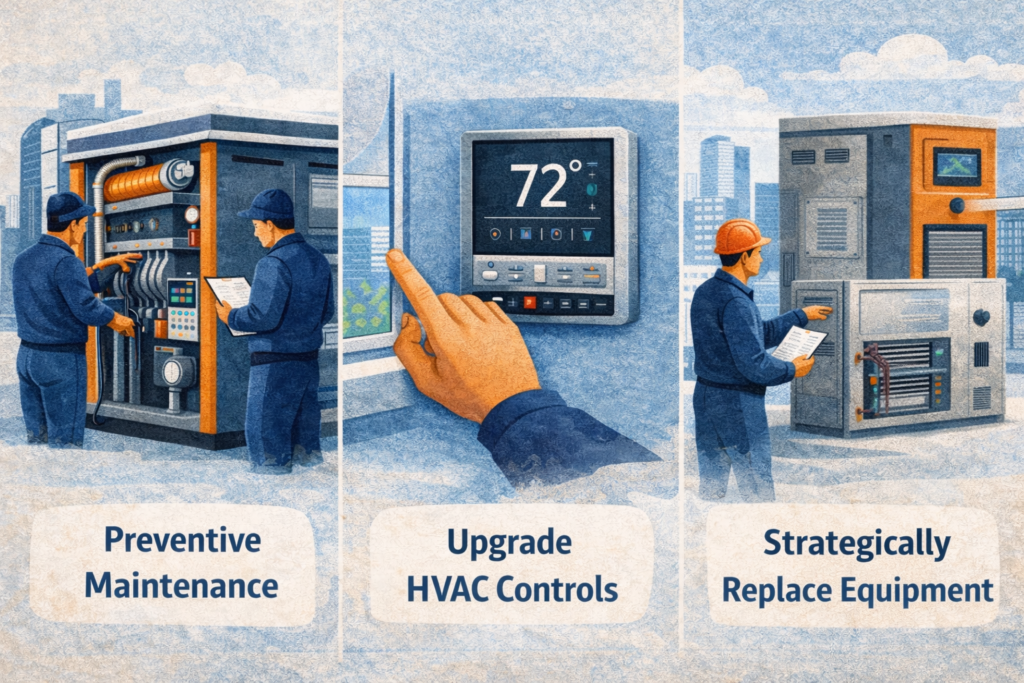
The HVAC system can only perform as efficiently as the structure allows.
Energy losses frequently occur through:
- Poor insulation
- Unsealed ductwork
- Drafty windows
- Damaged weather stripping
- Roof penetrations
In Michigan winters, even minor air leaks allow cold air infiltration that forces heating systems to compensate. During summer, humidity infiltration increases cooling demand and dehumidification load.
Improving the building envelope often provides a strong return on investment. Sealing gaps, upgrading insulation, and improving window performance reduce overall heating and cooling demand — lowering system runtime and energy expenses.
Balance Airflow and Optimize Zoning
Airflow imbalance causes inconsistent comfort and wasted energy.
Professional air balancing ensures that supply and return air volumes are distributed properly throughout the building. Without balancing, some zones may be over-conditioned while others remain uncomfortable.
Effective zoning strategies allow facility managers to:
- Reduce conditioning in low-occupancy areas
- Adjust temperature settings by department or use
- Prevent unnecessary heating or cooling after hours
In larger commercial facilities, zoning improvements alone can significantly reduce overall HVAC runtime.
Monitor Energy Performance Continuously
Data-driven facility management produces better results than reactive troubleshooting.
Ongoing monitoring should include:
- Monthly utility bill comparisons
- Seasonal performance reviews
- Equipment runtime tracking
- Fuel-to-degree-day comparisons
When energy consumption increases without clear explanation, it signals underlying system inefficiencies.
Integrating HVAC systems with building management software allows:
- Real-time performance visibility
- Automated alerts
- Predictive maintenance scheduling
Proactive monitoring reduces downtime and prevents long-term energy waste.
Replace Aging Systems Strategically
At a certain point, aging equipment becomes more expensive to operate than to replace.
Modern commercial HVAC systems offer:
- Variable-speed motors
- Higher AFUE and SEER ratings
- Improved combustion efficiency
- Advanced heat exchanger designs
- Lower emissions
Strategic replacement planning allows facility managers to:
- Avoid emergency installations
- Schedule upgrades during off-peak seasons
- Compare multiple system designs
- Apply for utility rebates
JF Jacobs works with commercial properties across Southeast Michigan to evaluate lifecycle costs and implement replacement strategies that prioritize long-term efficiency and reliability.
Train Staff and Standardize Operational Practices
Energy savings depend not only on equipment, but also on operational discipline.
Best practices include:
- Limiting thermostat overrides
- Reporting unusual system sounds or odors promptly
- Avoiding blocked vents and returns
- Following established shutdown procedures
When building occupants understand how HVAC systems operate, small behavioral changes can produce measurable cost reductions across large facilities.
Plan for Seasonal Transitions
Seasonal preparation is critical in Michigan’s climate.
Before winter:
- Inspect heating components
- Tune burners and boilers
- Clear outdoor air intakes
- Test freeze protection controls
Before summer:
- Clean condenser coils
- Inspect cooling towers
- Check refrigerant charge
- Calibrate thermostats
Preparing systems before peak demand improves reliability and ensures optimal efficiency during extreme weather conditions.
Cost Reduction Is a Continuous Process
Reducing heating and cooling costs is not a one-time adjustment. It requires consistent oversight, performance tracking, and strategic investment.
By combining:
- Preventive maintenance
- Smart automation
- Proper equipment sizing
- Building envelope improvements
- Strategic upgrades
- Staff training
Commercial facilities can significantly reduce operating expenses while improving comfort and system longevity.
For commercial properties in Southeast Michigan, proactive HVAC management is one of the most effective ways to control long-term operational costs.