
Walk-In Cooler Not Cooling? Common Issues and Fixes
Why Commercial Walk-In Coolers Stop Cooling — and What Businesses Should Do Next
A walk-in cooler that stops cooling properly can quickly become a serious problem for restaurants, grocery stores, commercial kitchens, convenience stores, and food service operations. Even a short period of temperature instability can lead to food spoilage, lost inventory, operational downtime, and potential health code concerns.
Because walk-in coolers run continuously, wear and tear are inevitable over time. The good news is that many cooling issues start with warning signs before a complete failure occurs.
If your walk-in cooler is not maintaining proper temperature, understanding the most common causes can help you respond quickly and prevent a more expensive breakdown.
Why Proper Walk-In Cooler Temperature Matters
Commercial refrigeration systems are designed to maintain consistent temperatures for food safety, inventory protection, and operational efficiency.
Most walk-in coolers should maintain temperatures between:
35°F to 38°F
When temperatures begin to rise above this range, products can spoil quickly, especially in high-demand food service environments.
Improper cooling can also force the refrigeration system to work harder, increasing energy costs and accelerating equipment wear.
Common Signs Your Walk-In Cooler Is Not Cooling Properly
Cooling problems often begin gradually.
Common warning signs include:
- Interior temperature feels warmer than normal
- Products are not staying consistently cold
- Excess condensation inside the cooler
- Ice buildup on coils
- Loud or unusual noises
- Compressor running constantly
- Rising utility bills
- Water pooling near the unit
- Uneven cooling throughout the cooler
If you notice these issues, it’s important to act quickly.
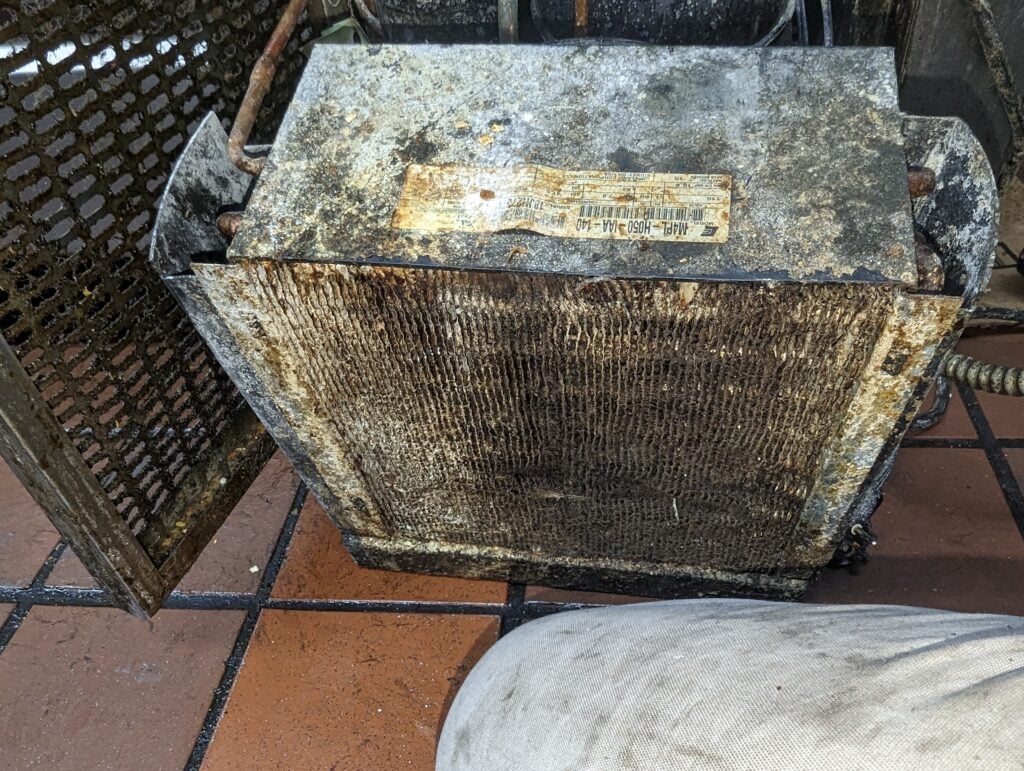
Dirty Condenser Coils
Dirty condenser coils are one of the most common reasons a walk-in cooler loses cooling performance.
The condenser’s job is to release heat from the refrigeration system. When coils become coated with dust, grease, dirt, or debris, heat transfer becomes less efficient.
This causes:
- Reduced cooling performance
- Longer run times
- Increased energy use
- Compressor strain
- Higher risk of equipment failure
Restaurants are especially vulnerable because grease and airborne kitchen debris accumulate quickly.
Fix:
Professional coil cleaning and regular preventive maintenance can restore efficiency and reduce system strain.
Faulty Door Gaskets or Poor Door Seals
Walk-in cooler doors are opened constantly throughout the day.
Over time, door seals and gaskets wear out, crack, or stop sealing properly.
When warm outside air enters the cooler:
- Internal temperatures rise
- Condensation increases
- Frost buildup can occur
- Cooling systems work harder
Even a small air leak can create major efficiency issues.
Fix:
Inspect door seals regularly and replace damaged gaskets immediately.
Refrigerant Leaks
Low refrigerant levels significantly reduce a refrigeration system’s ability to cool effectively.
Leaks may develop due to:
- aging connections
- vibration wear
- damaged coils
- component failure
Signs of refrigerant issues include:
- weak cooling performance
- ice buildup
- hissing sounds
- longer compressor run times
- temperature inconsistency
Fix:
Refrigerant systems should only be diagnosed and serviced by licensed commercial refrigeration professionals.
Evaporator Coil Ice Buildup
When evaporator coils freeze over, airflow becomes restricted and cooling performance drops dramatically.
Common causes include:
- airflow restrictions
- refrigerant issues
- dirty coils
- door seal leaks
- fan problems
Businesses often notice:
“the cooler is running, but it’s not staying cold.”
That’s a common symptom.
Fix:
The underlying issue must be identified and corrected—not just temporarily defrosted.
Failing Evaporator Fan Motors
Evaporator fans circulate cold air throughout the walk-in cooler.
If a fan motor fails:
- airflow becomes uneven
- warm spots develop
- cooling becomes inconsistent
- compressor strain increases
This is especially problematic in larger walk-ins.
Fix:
Fan motors should be inspected and replaced when performance declines.
Thermostat or Temperature Control Problems
Sometimes the refrigeration system itself is functioning, but controls are not communicating correctly.
A faulty thermostat can cause:
- incorrect temperature readings
- short cycling
- overcooling
- insufficient cooling
Fix:
Commercial refrigeration controls should be tested and calibrated as part of professional service.
Compressor Problems
The compressor is essentially the heart of the refrigeration system.
If it begins failing, cooling performance quickly declines.
Warning signs include:
- loud noises
- hard starting
- constant running
- warm interior temperatures
- repeated breaker trips
Compressor failures are one of the more expensive refrigeration repairs.
Fix:
Early diagnosis may prevent full compressor replacement.
Blocked Airflow Inside the Cooler
Cooling depends on proper airflow.
Overloaded shelves, blocked vents, or poor inventory organization can prevent cold air from circulating properly.
This leads to:
- uneven temperatures
- warm zones
- overworked refrigeration systems
Fix:
Ensure proper spacing and airflow throughout the cooler.
Defrost System Problems
Walk-in coolers rely on proper defrost cycles to prevent excessive ice buildup.
If the defrost system fails:
- coils freeze over
- airflow drops
- cooling performance suffers
This issue often goes unnoticed until performance drops significantly.
Fix:
Defrost timers, heaters, and controls should be inspected professionally.
Preventive Maintenance Prevents Most Walk-In Cooler Problems
The majority of commercial refrigeration failures do not happen without warning.
Routine maintenance helps catch issues early before they become emergencies.
Preventive refrigeration maintenance typically includes:
- condenser coil cleaning
- refrigerant checks
- electrical inspections
- thermostat testing
- evaporator inspections
- fan motor checks
- gasket inspections
- performance testing
This reduces downtime, protects inventory, and improves equipment lifespan.
When to Call for Commercial Refrigeration Service
If your walk-in cooler is not maintaining temperature, don’t wait until products are lost or the system completely fails.
Call for service if you notice:
- rising temperatures
- unusual noises
- ice buildup
- excessive condensation
- poor airflow
- repeated cycling
- increasing utility costs
Early intervention almost always saves money.
Refrigeration maintenance isn’t just about preventing breakdowns—it’s about protecting your inventory, maintaining food safety, and keeping your business running without interruption.
By following these best practices and investing in preventive maintenance, restaurants and supermarkets can reduce costs, extend equipment lifespan, and avoid unexpected disruptions.
Contact us today to schedule your commercial HVAC service.
Walk-In Cooler Repair in Southeast Michigan
If your business depends on reliable refrigeration, J.F. Jacobs provides professional commercial refrigeration service throughout Southeast Michigan.
We help restaurants, grocery stores, food service operations, institutional kitchens, and commercial facilities with:
- walk-in cooler repair
- refrigeration maintenance
- emergency refrigeration service
- refrigeration troubleshooting
- system evaluations
Serving:
- Livonia
- Detroit
- Wayne County
- Oakland County
- Macomb County
- Southeast Michigan